
Find the Owner Behind a Caroline County Parcel
No single office holds the whole answer in Caroline County. The Commissioner of the Revenue takes real-estate inquiries and can supply owner and mailing information. The Circuit Court Clerk keeps the deed index. The most recent recorded deed shows the transfer you should measure against the tax-roll name. That deed may name a company rather than a person. For an LLC or similar entity, the Virginia SCC business filing system offers registered-agent and entity context. A tax-map number or legal description keeps you from matching the wrong same-name parcel.
- Identify the parcel by situs address or tax-map number through the county’s real-estate information route.
- Request the owner name and mailing address from the Commissioner if the online card is not exposed.
- Search the Clerk index for the newest deed and compare the grantee and legal description.
- If the grantee is an LLC or corporation, check the SCC filing for the entity’s registered agent and filings.
Caroline County Owner Sources Compared
Each office answers a different question. The Commissioner handles assessment and owner-information requests. The Clerk records the deed and its grantee. The Treasurer can find a tax account by name, parcel, or street, though that is a tax search and not a title record. GIS orients the parcel and its town line, but the county map does not return owner names.
| Source | Owner Info It Gives | Access |
|---|---|---|
| Commissioner of the Revenue | Owner and mailing-address information can be requested | County inquiry form; phone and email contact |
| Circuit Court Clerk | Grantee and grantor names on recorded land instruments | Free index; images by subscription or Clerk request |
| Treasurer | Taxpayer account search by name, account, parcel or street | Public tax inquiry; confirm current balance with office |
| Virginia SCC | Entity status, registered agent, principal office and filings | Clerk’s Information System |
An owner of record is the name on a public record. The occupant may be someone else entirely. A tax-roll mailing address can sit outside the parcel and even outside its town. Caroline County's courthouse records deeds for both Bowling Green and Port Royal. A town mailing address never changes the county custodian. If the assessment roll lags a recent transfer, the newest deed controls.
Write the record date and source beside every name you collect. The Commissioner's owner information and the Clerk's recorded deed update on different schedules. A mismatch calls for a closer look rather than a verdict that one office is wrong. Check whether the deed is a fiduciary transfer, an entity conveyance, or a partial-interest deal. Compare its legal description with the parcel key. The Treasurer's tax account can confirm which parcel is in play. A taxpayer name never replaces the grantee named in the land instrument.
Limits of a Caroline County Owner Lookup
A public owner name has limits. It will not surface every person holding an interest. It will not show who actually lives at the address. It will not prove the title is free of claims. Trusts, LLCs, life estates, and probate transfers can all place an entity or fiduciary in the grantee field. The tax roll may lag a newly recorded sale. No GIS map substitutes for the deed itself. Match the document and parcel description before treating a search result as final.
Lawful use. Use a Caroline County owner lookup for property due diligence, tax review, estate work and civic research. Do not use a name or mailing address to stalk, threaten, harass or expose a protected person.
Requesting Owner Information in Caroline County
When no public parcel card is available, the Commissioner's web form is the documented channel. It asks for the property owner's name and the property address, with the tax-map number and subdivision or lot as optional fields. The requester supplies separate contact details. You can ask for the owner name and mailing address, the tax-map number, a deed reference, sales information, the current assessment value and levy, or pose a general question.
Comments, attachments, and an email-copy option round out the form. It directs you to call 804-633-9834 if no response arrives within 48 hours. Treat it as a request channel rather than a public search by owner name. Specifics about the parcel help the reply land on the right record. Use the Commissioner's real-estate request form for the official fields.
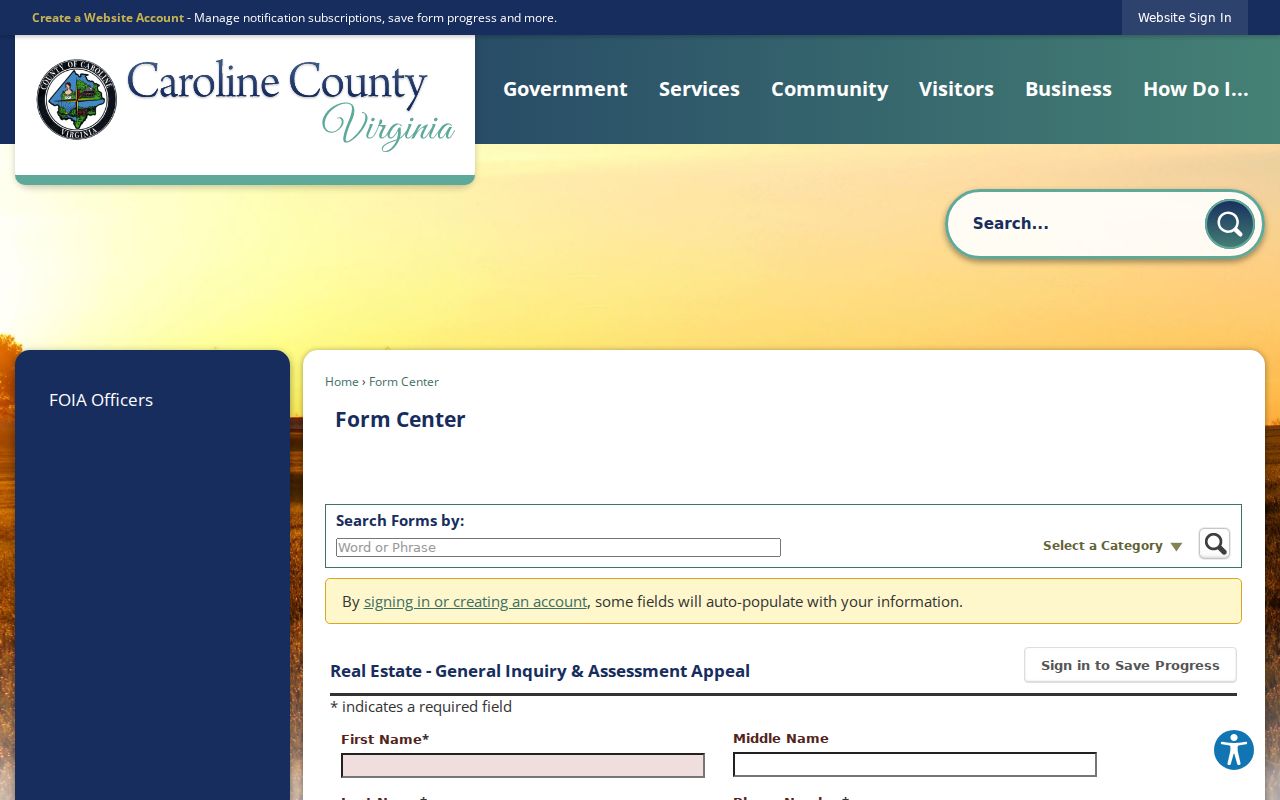
The form separates requester fields from property fields. That split keeps a mailing address from being mistaken for the parcel address.
Confirm a Caroline Owner Through the Latest Deed
The Clerk's land index is the trail for transfers. Search it for the most recent deed under the current owner or grantee name. Then weigh the grantor, recording date, instrument type, and legal description together. Caroline's remote index is free to search. Deed images, though, require a subscriber account or a courthouse copy request. The Clerk's records are official, and the remote data is informational only.
Search by the parcel key rather than a name alone. Since January 1, 2023, land, judgment, and financing-statement records are no longer indexed by Book and Page. A newer deed may need a current document identifier plus party and date filters. The Clerk office listing provides the courthouse and contact path if the image is unavailable. The Clerk's office page describes its land-title role. It also explains how to reach staff for help with a record.
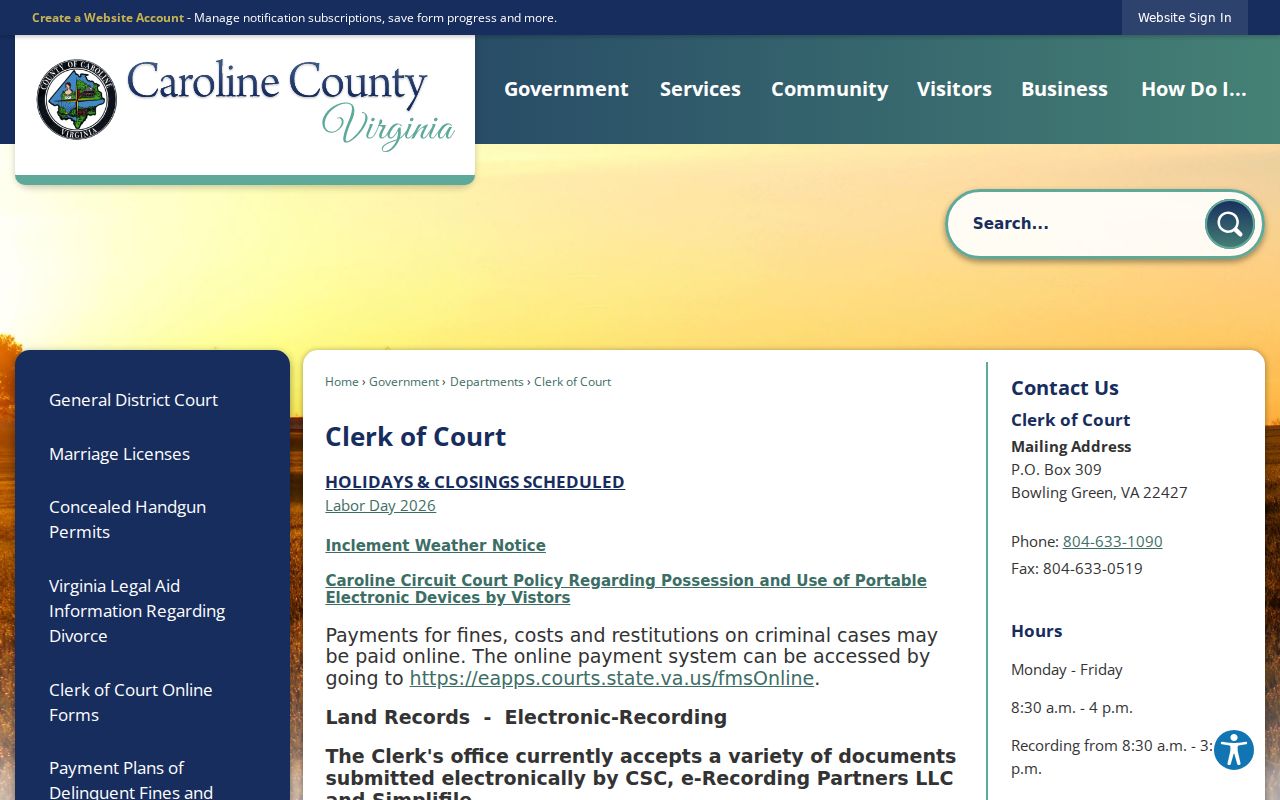
Pull the recorded instrument with the index citation before deciding a name match settles the owner.
LLCs, Trusts and Estates in the Owner Record
A deed in the Caroline County property records sometimes names an LLC as the grantee. It can also name a corporation, a trustee, or an executor. The recorded instrument identifies the legal owner of record. It does not spell out every person who controls or benefits from the entity. That distinction matters when you trace ownership through deed records. To go deeper, search the exact entity name in Virginia's SCC Clerk's Information System. There you can check status, registered agent, principal office, and filings. Compare those details against the deed and the Commissioner record before drawing conclusions.
An estate adds its own layers to the chain of title. Expect a will, a fiduciary qualification, an executor deed, a probate sale, or a deed from heirs. Caroline's Circuit Court Clerk keeps both land records and will records. Scanned wills are indexed from 1814 through March 1999. Will-book images start with Will Book 39 in 1929. Those early dates do not mean every will image is freely viewable online. The records behind one owner name can run deeper than a single current parcel card. The Virginia SCC entity system is a separate source for business filings.
An entity filing adds context to a grantee name. It cannot replace the recorded deed, and it does not reveal every beneficial owner in the property records.
Caroline County Mailing and Situs Clues
Two addresses sit inside Caroline County property records, and they answer different questions. A situs address shows where the parcel lies. A mailing address shows where the tax bill goes. The Commissioner's form asks for the requester's mailing address. It keeps that separate from the property address and owner of record. Someone can own land in Bowling Green or Port Royal yet receive mail somewhere else entirely. A rural postal address may carry a town name. Even so, the parcel may sit outside the incorporated boundary.
When a location is unclear, the GIS map town-boundary layer settles it. The tax-map number helps too. The Treasurer can search a street by name alone. That may pull up several accounts along the same road. That trick helps with discovery. It proves neither adjacency nor ownership by itself. Confirm any parcel through the latest deed and its recorded legal description.
Caroline County Filing Alerts and Privacy
The Clerk's Property Notification service sends an email when a document with a registered name is filed. It does not watch a parcel address or map geometry. An alert does not certify the filer's identity or the validity of a deed either. Treat the notice as a prompt to inspect the instrument through the Clerk, not as proof that a transfer is valid.
The system is name-based, so it works best as one part of a review routine. Register the relevant person or entity name. Keep the message if one arrives. Then compare the filing number and parcel description with the property of interest. A notice for a common name may concern someone else entirely. A filing under a trust, a business, or an alternate spelling may never trigger the exact name you entered. The alert service does not replace title monitoring, a periodic deed-index review, or professional advice where ownership is at stake.
Privacy protections also intersect with property records. Virginia's Address Confidentiality Program gives eligible survivors of domestic violence, stalking, child abduction, sexual violence, or human trafficking a substitute address and mail forwarding. Identifying records about current or former participants are exempt from FOIA under Code §2.2-515.2, subject to the statute's limits. Public records must never be used to defeat that protection. Read the Virginia Address Confidentiality Program statute for the official scope.
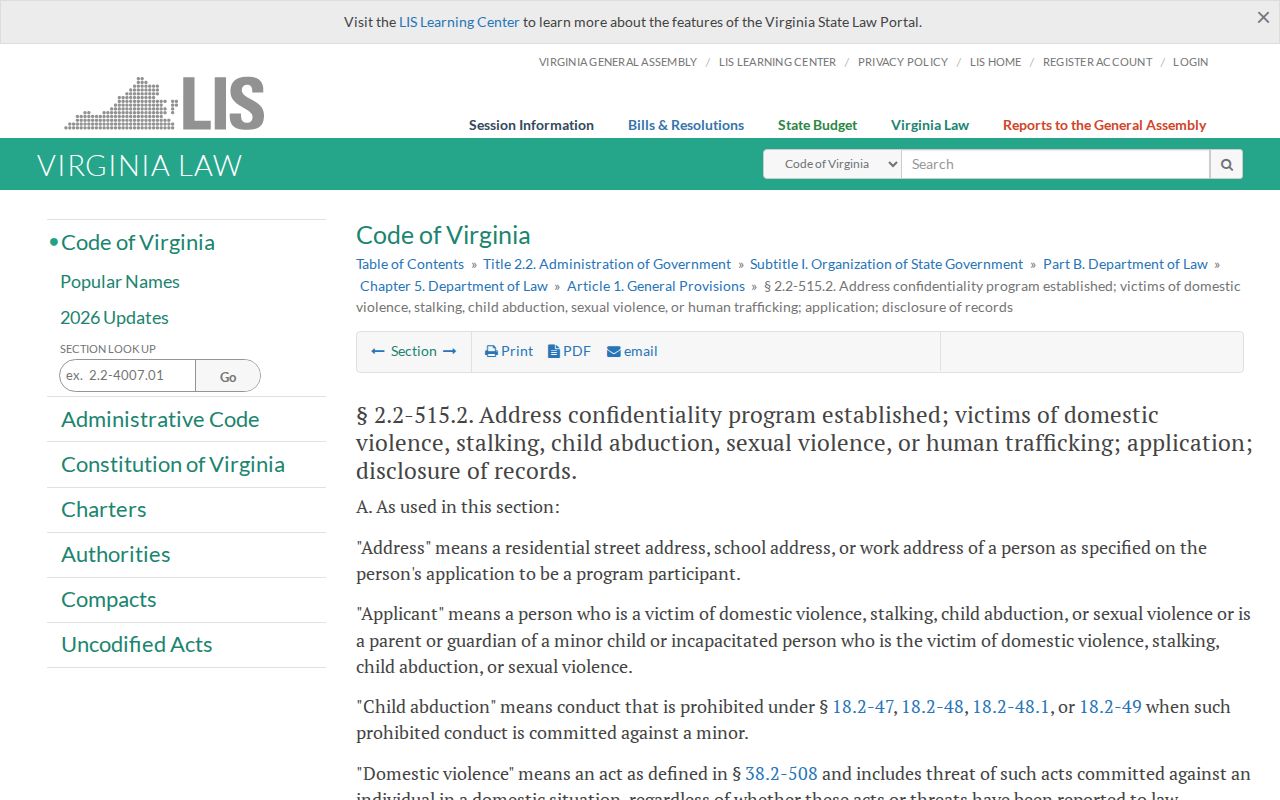
Note: The statute protects eligible participants' identifying records, and ordinary owner-search results do not override those protections.