
Caroline County’s Past Owner Sources
The newest recorded deed comes first. Pull that grantee's document, then locate the deed by which the same party acquired the parcel. Caroline's land index has limits. Older material lives in separate deed books and archive series, so coverage dates describe what was documented rather than a promise that every original survived. Not every image is viewable remotely, either.
| Source | Years It Covers | Where Held | What It Shows |
|---|---|---|---|
| Clerk scanned land index | Dec. 14, 1896 to Mar. 31, 1984 | Caroline remote land records | Indexed parties and deed citations |
| Clerk computerized land index | Apr. 1, 1984 to current | Caroline remote land records | Modern party and instrument search |
| Deed images | Book 66 (1896) to current | Clerk subscriber access or courthouse | Recorded instrument text and description |
| LVA deed book and indexes | 1758 to 1889 runs identified | Library of Virginia microfilm | Older grantor, grantee and land descriptions |
Post-1896 transfers start in the Clerk index. For earlier years, use the Library of Virginia collection catalog and its microfilm list. A plat can tie a named lot to a modern tax-map key. When an early deed is missing, an order book or probate instrument may fill the hole. No single source spans every Caroline year.
Walk Back from a Caroline Grantee
A grantor gives an interest. A grantee takes it. Trace ownership from the newest recorded grantee, and find that deed first. Read the grantor and parcel description carefully. Then search that grantor's name as an earlier grantee. Keep the legal description beside each name. One person may have held several tracts or sold only part of a parcel.
- Find the latest deed with the present grantee and capture the recording date, instrument type and legal description.
- Search the grantor named in that deed as a grantee to find the prior acquisition.
- Compare lot, map, district, road and adjoining-owner language before linking the next deed.
- When the online index stops, move to the relevant Clerk book or Library of Virginia reel.
- Grantor / grantee
- The parties conveying and receiving the property interest.
- Chain of title
- The ordered sequence of transfers tied to the same land.
- Legal description
- The deed or plat language identifying the parcel, sometimes older than the street address.
Caroline County’s 1864 Chain Gap
Caroline is a Library of Virginia lost-records locality. Union troops ransacked the courthouse in May 1864. Many loose records, deed books before 1836, and will books before 1853 were stolen, mutilated, or destroyed. The earliest surviving deed reference is therefore not always the first one ever made for a tract. A gap may reflect that documented loss.
Research limit. Use prior-owner records for property history, estate work and title diligence. Do not use the chain to track, threaten or harass a living person.
Caroline County’s 2023 Citation Change
Caroline deed searches cross two index eras: scanned books from 1896 through March 1984, and computerized indexing from April 1984 onward. A second change affects newer filings. Since January 1, 2023, land, judgment, and financing filings are no longer indexed by Book and Page. A search crossing that line should lean on party names and current document identifiers first. Older entries then call for legacy book references. Note the split before you search.
The Clerk's remote service is the current index route. It also explains the image subscription. Free indexing does not mean every old image opens without an account. Ask the Clerk about a courthouse copy and current charges for a reference you cannot view.
Start online with the Caroline Clerk land-record service.
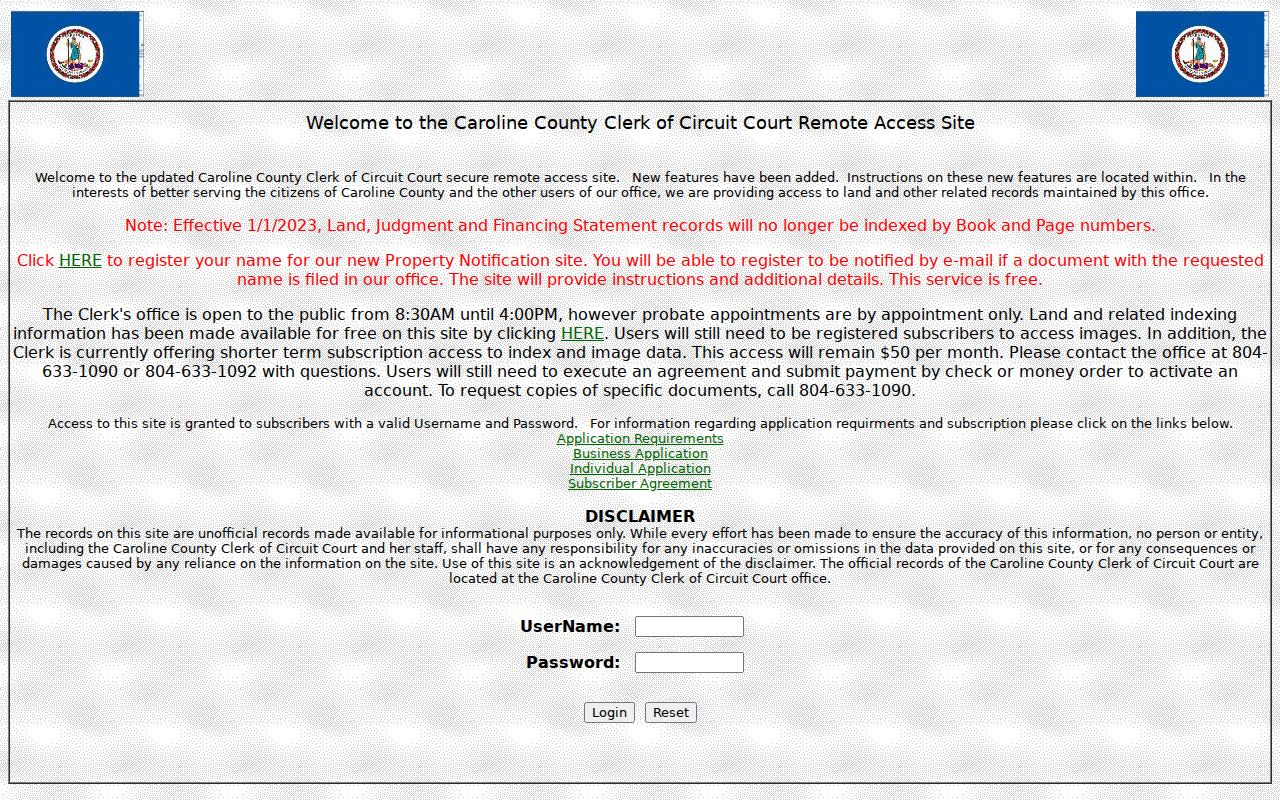
The index gives the party and instrument clues needed to continue a prior-owner search.
Caroline Deed Books on Library Reels
The Library of Virginia finding aid covers Caroline Deed Book 1758–1845 on Reel 6. Entries are arranged by grantor, grantee, residence, and property description. Reel 5 holds the 1836–1872 deed index. Reel 68 contains deed runs from 1815–1859 and 1867–1889. Separate book entries cover later volumes. These reels reach behind the county web index. They can carry a chain into older ownership when the online trail stops.
Use the catalog to choose a reel. Note the exact series before any visit or copy request. Old names can be spelled several ways. Search variants and compare adjoining land, district, and river descriptions. If a deed book is missing or damaged, check the near-complete order-book run. Later instruments may restate or confirm the conveyance.
Build a short citation list before switching systems. Include the last deed found online, the parties and spelling variants, the recording date, the book or instrument number, the lot or acreage, and the next year range to check. Reel 6 spans 1758–1845. Reel 5 indexes 1836–1872. Reel 68 holds several deed runs separated by the 1864 loss. Dates often overlap between reels. That overlap helps verify a name or description across collections. It does not replace reading the source instrument to confirm the same tract is involved.
The caroline deed-book finding aid describes Reel 6 and the 1864 records loss.
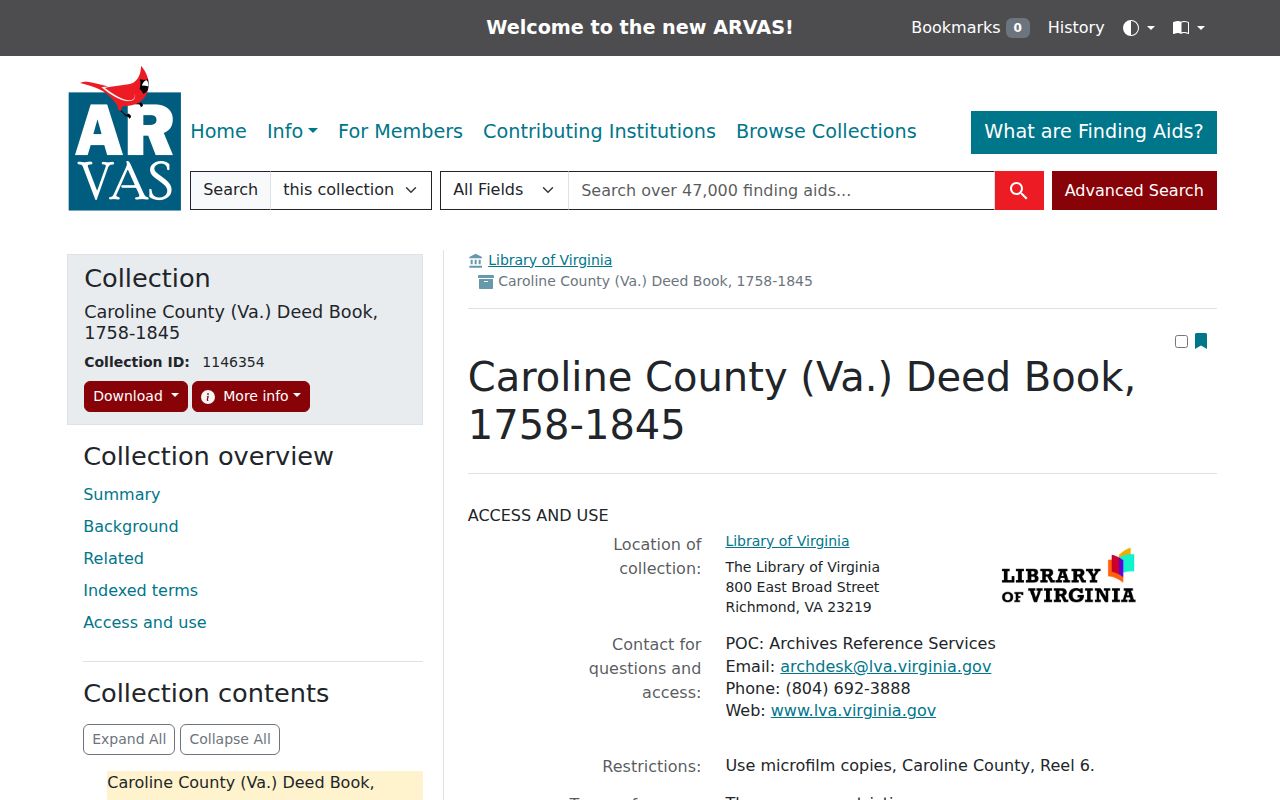
Scope details separate the surviving collection from records the 1864 loss destroyed.
The broader Caroline County microfilm list names additional deed, order, will, and fiduciary runs.
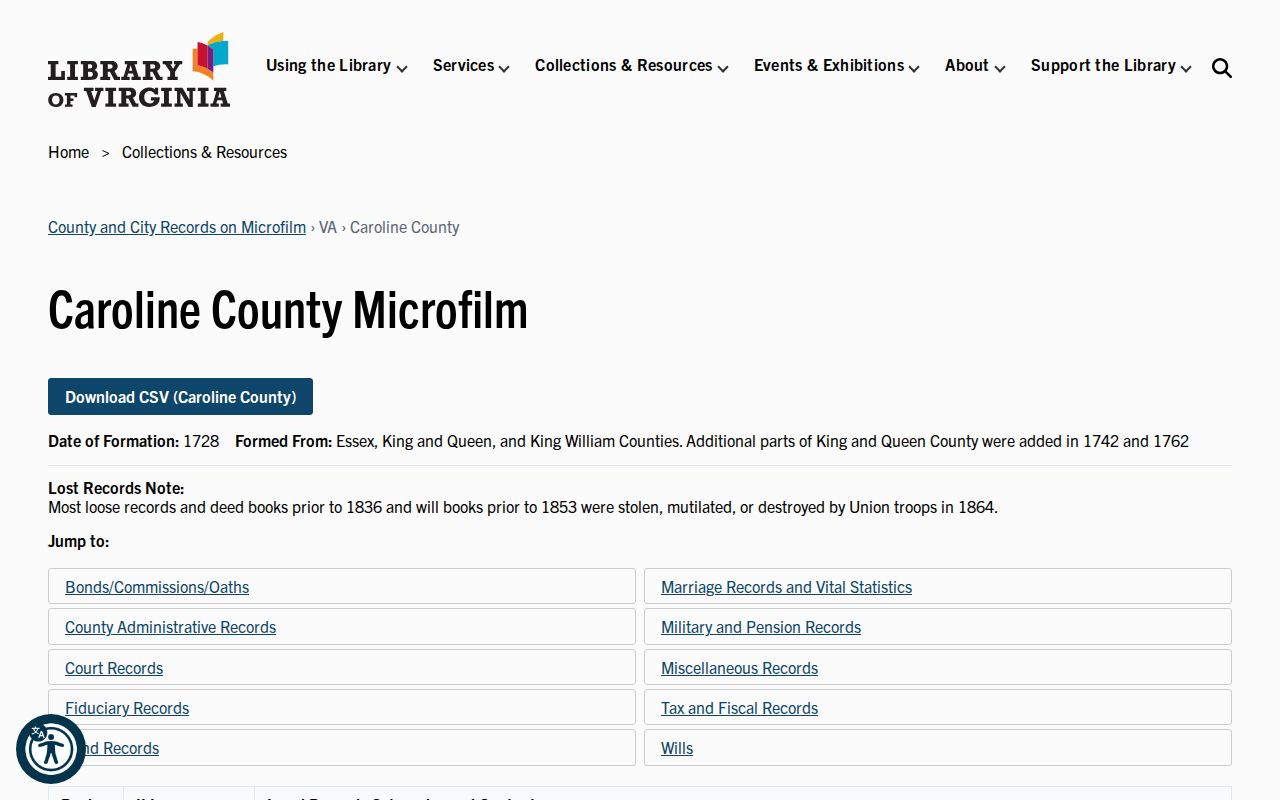
Compare each reel's dates with your last online deed.
Plats and Probate in a Caroline Owner Chain
Estate settlements, lot splits, and subdivision revisions can all change the names in a Caroline County owner chain. The Clerk of Court here holds both wills and land instruments. Its scanned wills index runs from 1814 through March 1999. Will-book images start later, at Will Book 39 in 1929. The earlier records suffered from the courthouse loss. The image route is separate from free land-index access. An executor or administrator deed can name the fiduciary who transferred a parcel after someone died.
Probate material works best for two jobs. It identifies the person authorized to act. It also points to the instrument that actually conveyed the land. A will may devise property. Yet title often moved through a later fiduciary deed, a court order, or a deed from heirs. Caroline County's surviving order books help bridge gaps because their run is described as near complete. An order book still is not a recorded land instrument. Keep each source's date, book, page, reel, and role in separate notes.
Plats offer another bridge when a former owner conveyed only part of a tract. Lake Caroline's revised Lots 1841 and 1842, its vacated line, and tax-map section 67A5-1 show how a current parcel can keep a link to older deed references. Ladysmith Crossing planning records identify source parcels and proposed lots. Pair those clues with the recorded plat and the actual instrument before connecting one owner to another.
Splits and recombinations create one more trap. A modern parcel may not match a single historical owner's entire tract. Follow the legal description through each deed. Mark where the acreage, lot number, road boundary, or adjoining owner changes. An older deed may point to a parent tract. Then look for the later plat or conveyance that created the current lot. That habit prevents a mistake. It keeps a name match for neighboring land from being mistaken for a prior owner of the subject parcel.
House History Beyond the Caroline Deed Books
The land chain comes first. Once it is solid, local-history collections can add names and context. They never replace the deed record. The Caroline County Public Library points to Ancestry Library Edition. It also offers a searchable Denton Journal run from 1870 to 1965, plus an Almshouse Ledger covering 1901 to 1940. The Library of Virginia holds county deed books, order books, newspapers, Chancery cases, maps, and land patents. Old place names matter too. Search historic street and district names as well as the current address.
Caroline County geography can also change the wording of old records. Port Royal descriptions may speak of river frontage, wharves, or adjoining owners. Bowling Green property may rely on courthouse-centered roads or historic-lot descriptions. A county tax-map key can bridge those terms to a current parcel. A newspaper or genealogy entry supplies context. It is not legal proof. The Caroline library local-history collection lists its newspapers and genealogy sources.
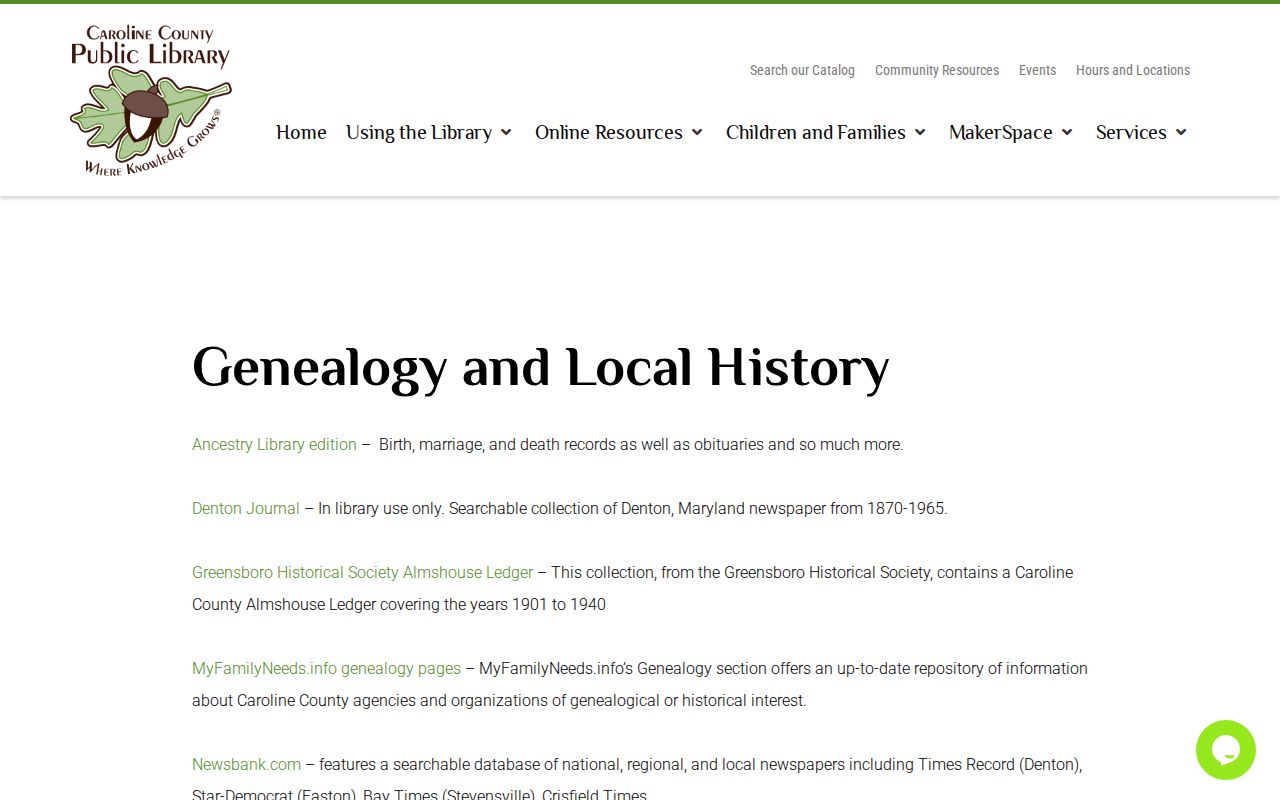
Use the newspaper and ledger collections to layer house-history detail once the deed trail is anchored.