
The Caroline County Owner-of-Record Fields
Caroline County does not publish a single parcel card with every owner field filled in. The Commissioner's inquiry form is more flexible. It accepts an owner name or property address. It also lets you request the owner's name and mailing address, the assessment value, the tax-map number, sales data, or a deed reference. Treat the fields as a checklist. No single online screen in Caroline County promises all of them at once.
| Owner name | The Commissioner’s form can request owner name and mailing address. |
|---|---|
| Property address | The situs clue used to identify the land. |
| Tax-map number | An optional parcel key on the inquiry form. |
| Assessment value and levy | Request types on the Commissioner form; verify effective year. |
| Deed reference | Can be requested from the Commissioner and checked in the Clerk index. |
| Grantee and vesting language | Read in the latest recorded deed image, not inferred from the map. |
An owner of record is simply the name a given system carries. It may be a trust, an LLC, an executor, or several grantees at once. The mailing address can differ from the situs address. It can even sit outside Caroline County. The GIS viewer helps locate the parcel and the town line. However, it publishes no owner-name field.
When you request an owner name in Caroline County, describe the parcel by record. Give the property address and the tax-map number. Ask whether the answer reflects the assessment roll or another source. The Commissioner's form separates the requester's mailing details from the owner and situs fields. That separation keeps a return address from being mistaken for the property location. For a recent transaction, include the recording date or deed reference. That way the office knows which update you are reconciling.
Keep the Commissioner's response with its date and the parcel number. A name can change after a deed is recorded. Caroline County publishes no fixed interval between a closing and an assessment update. If the county response and the newest deed disagree, confirm both describe the same parcel. Ask whether a later update is pending. Never resolve a mismatch with an unrelated mailing address, a map label, or a search-provider result.
Check the Current Owner Against a Deed
Start with the roll to find the owner name. Then check the latest transfer in the Clerk's deed index. The deed's grantee and recording date show what was recorded. The legal description shows which land it covers. A recent sale can make the newest deed more current than the assessment roll. Caroline County publishes no set closing-to-roll lag. Avoid inventing a number of days or months.
Multiple grantees call for reading the vesting clause. Avoid collapsing the result to one name. A deed can convey an undivided interest, add a spouse, or name a trustee. It can also transfer land to an executor or a company. An index that lists only a party may omit how the parties relate. Get the instrument itself. Compare the full legal description. Check for a later corrective or fiduciary deed before calling anyone the sole owner.
- Identify the parcel by situs address or tax-map number in the Commissioner’s real-estate materials.
- Request owner name, mailing address or deed reference if no public card displays the needed field.
- Search the Clerk index for the latest deed by the current grantee and compare the legal description.
- If an entity is named, check the Virginia SCC filing for public entity details and keep the deed as the land record.
- Owner of record
- The name listed by the assessment or deed record being reviewed.
- Grantee
- The party receiving the interest in the recorded deed.
- Situs and mailing
- The property location and the address used for owner mail can be different.
- Registered agent
- A public contact listed for a business entity, not necessarily its owner.
Mailing and Situs in Caroline County
The Commissioner's request keeps the property address, the requester's mailing address, and the owner's name in separate fields. The owner's mailing address works for sending a notice. It is not the situs of the land. It also does not prove where anyone lives. A Bowling Green or Port Royal postal address does not even establish that a parcel sits inside that Caroline County town boundary.
Lawful use. Use the public mailing field for a legitimate property matter. Do not use an owner record to stalk, harass, threaten or expose a protected person.
Why a Recent Caroline Deed Can Be Newer
A closing and an assessment update are separate events. Caroline County publishes no routine owner-roll refresh interval. A new transfer can appear in the Clerk's land index before the Commissioner's public assessment information catches up. If the names differ, compare the recording date, grantee, and legal description in the newest deed. Do this before treating the older roll name as current.
The Clerk's remote land index is free to search. Deed images require a subscriber account or a courthouse request. The 2023 index change matters too. New Caroline County land records no longer use Book and Page as the index key. Search by party and date instead, and record the current instrument identifier. The Clerk's land-record site shows the remote index and the image access route.
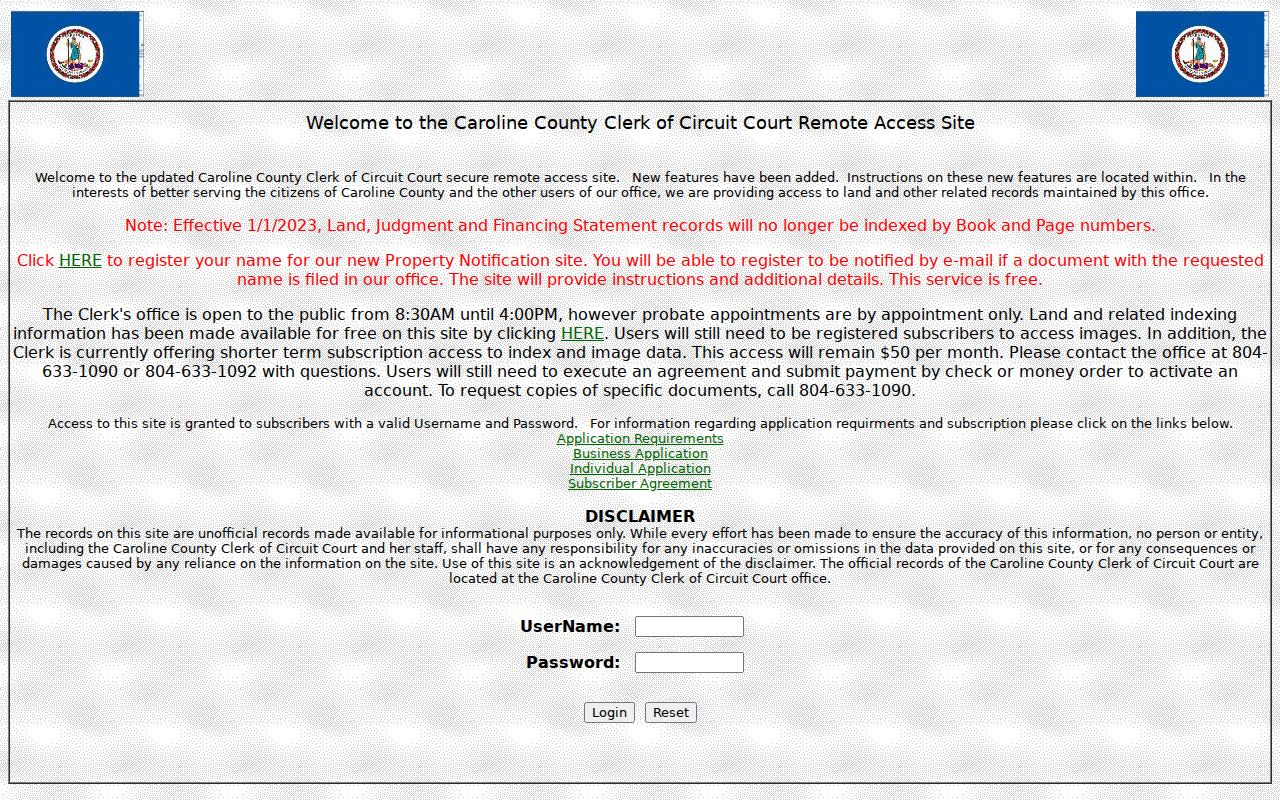
When an index citation points to a new transfer, ask the Clerk for the actual instrument. Confirm its parcel description before relying on the entry.
Entity Names on a Current Owner Record
Not every owner of record in Caroline County is a person. The grantee line on a deed often names an LLC, a corporation, or a trust. That is normal. It simply means the parcel search has one more layer.
For a business entity, run the exact name through the Virginia SCC Clerk's Information System. Entity status, registered agent, principal office, and filing history all live there. The SCC filing system is the state's own source, so it beats guessing. Still, an SCC record explains the entity, not the land. Only the recorded deed conveys the parcel, and only its language proves control.
Trusts and estates add a twist of their own. A trustee, executor, or administrator signs, yet the beneficial owner may be someone else entirely. Read the vesting language in the deed before assuming anything. A transfer can follow a death. Caroline County's Clerk keeps a will index alongside land instruments. The two record sets cover different periods.
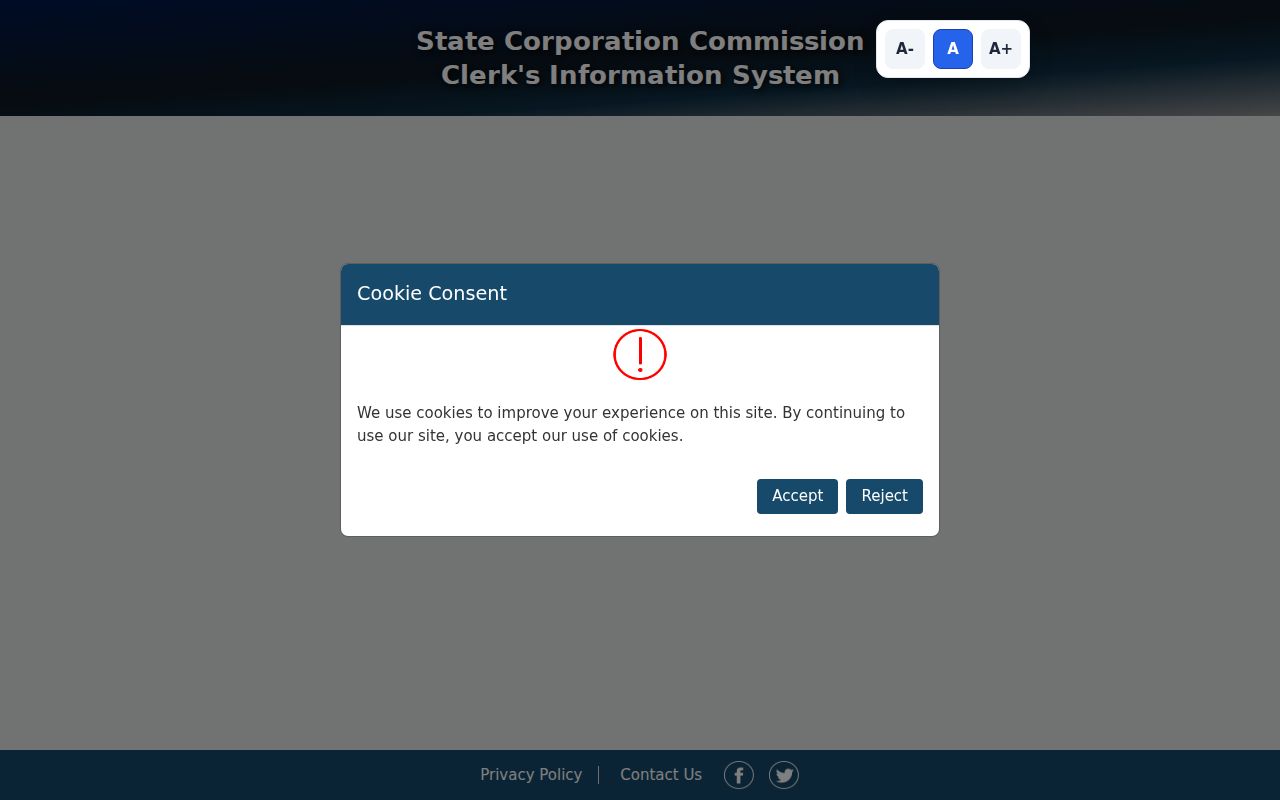
Treat registered-agent details as contact context only, and settle ownership by reading the recorded land instrument itself.
Current Owner Checks Inside Caroline Towns
Bowling Green and Port Royal are incorporated towns. Even so, Caroline County holds the records. Deeds, tax assessments, and tax tickets stay in county hands inside both town limits. The county parcel viewer draws the town-boundary lines. The Commissioner and the Clerk keep the underlying owner and deed records. A mailing city or ZIP alone cannot settle whether a parcel sits inside town lines.
A Bowling Green search gets easier with the county's permit application. It carries tax-map, subdivision, lot, block, section, and deed-reference fields. Port Royal deeds run older. Their descriptions lean on riverfront, wharf, or historic town-lot clues. In both towns, anchor the current-owner search to the parcel key and the recorded description. That keeps the deed records tied to the right piece of land.
Caroline County Filing Notifications
The Clerk offers a free Property Notification service. Register a name. The office then emails an alert whenever a document filed with that name hits the record. Know its limits. It watches names, not parcels. It cannot confirm that a filing party truly owns anything.
Think of a notice as a starting point. Pull the recorded document through the Clerk and read it. The service is not a title search. It promises nothing about hidden interests.
Registration still earns its keep after a purchase or for a family-held parcel. Spellings and legal forms complicate matters, though. A filing may come under an LLC, a trustee, an estate representative, or an alternate name. Such a filing may slip past an alert set for an individual. A common name cuts the other way. It pulls in filings that have nothing to do with your land. Open the underlying document before drawing any conclusion. Match the instrument number, the grantee, and the parcel description. Tie them to the Caroline County property you care about.
Need a copy an alert points to? The office listing at Caroline Circuit Court gives the public contact path. The Clerk can explain the current copy procedure for images not available remotely.
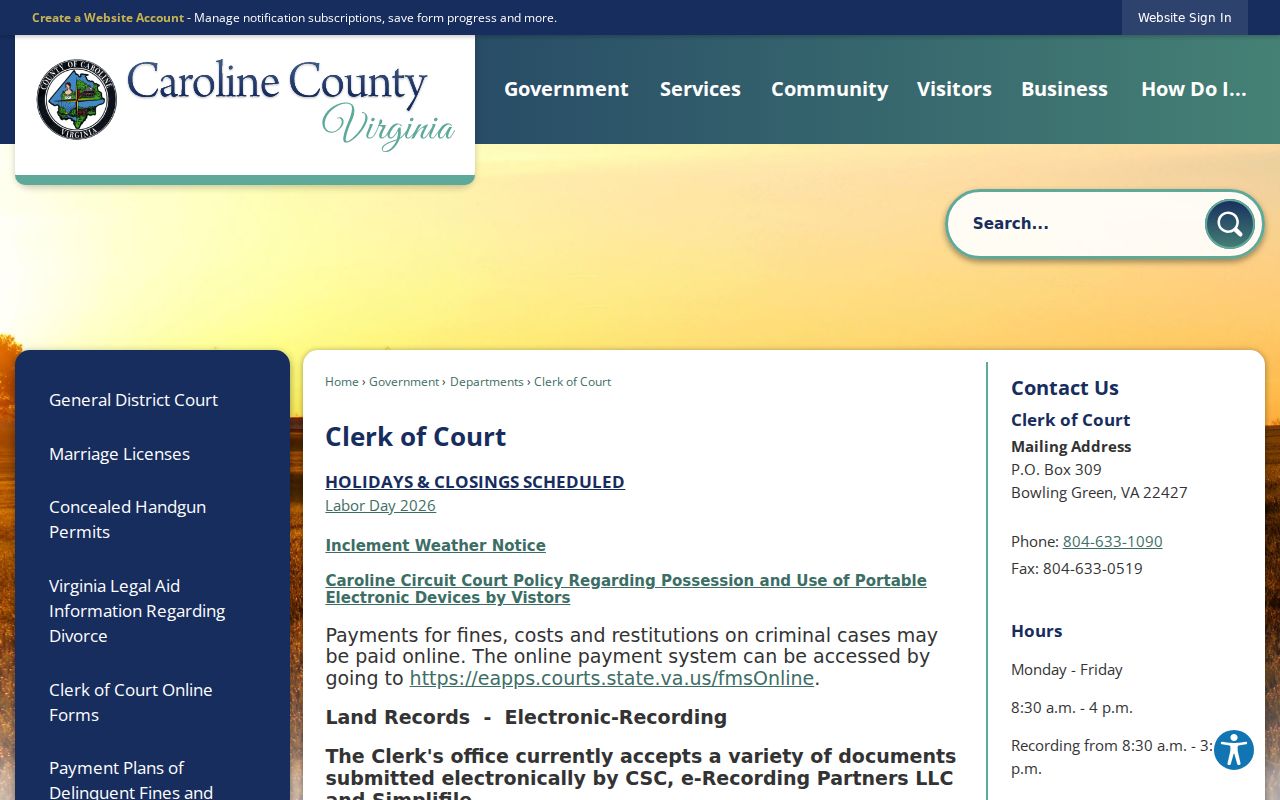
The office contact helps verify a filing and request the record behind an alert.