
Fields in Caroline County Tax Records
Assessment and payment live in separate systems in Caroline County. The Commissioner's real-estate page gathers the assessment, exemption, tax-map, and taxpayer-assistance resources. The Treasurer's public inquiry covers tax accounts. It also covers bill detail and payment history. A shared parcel key can tie the two views together. Still, the assessed value is not the amount due. The tax ticket sets what is owed.
| Field | What It Shows | Where |
|---|---|---|
| Assessment value and levy | Current tax assessment value and tax levy are listed request types. | Commissioner form |
| Exemption information | The county links real-estate exemption resources and application forms. | Commissioner of the Revenue |
| Tax account | Name, account, parcel and street searches are documented. | Treasurer inquiry |
| Payment history | The help page refers to a payment-history screen and detail screen. | Treasurer inquiry |
| Penalty projection | A projected date can calculate penalty and interest for an account. | Treasurer inquiry |
Caroline County publishes no public assessment card listing every parcel field, and no single page collects the county's exemptions or its tax rate. Ask the Commissioner for the specific field you need rather than assuming a value, mailing address, or exemption will surface in a live search. The Treasurer's payment record tells you whether a ticket carries a balance or a payment. It says nothing about market price.
Exemption questions go to the Commissioner, since that office links the real-estate exemption resources and application forms. Eligibility, proof, and filing dates vary by program and current instructions; no one exemption list or deadline covers every owner of record. Request the application that fits and note its effective date. Keep a copy of whatever you file. An exemption request also differs from an assessment appeal. One seeks a qualifying tax treatment. The other challenges the value itself.
Find a Caroline County Tax Ticket
The Treasurer's Real Estate Public Inquiry gives property owners four ways in. Search by name, account number, parcel number, or street name. The street option works best with the street name alone. Leaving off the house number casts a wider net. It can return several accounts at once. When you want a single Caroline County tax ticket, the parcel number is the surest route. The account number works the same way for one record. A help page also mentions a name-selection screen and a payment-history screen. A detail screen lets you review what you owe on a parcel.
- Use the bill’s account number or parcel number when available; otherwise try the owner name or street name.
- Read the selected tax detail and payment-history screens, checking the account key against the property record.
- Ask the Treasurer to confirm a balance or delinquency if a payment is recent or a projected date changes the amount.
- Use the Commissioner’s separate assessment and exemption resources for value or tax-map questions.
- Assessed value
- The value used in the county’s assessment process; it is not a sale estimate.
- Tax levy
- The charge shown by the local tax process; ask the county for the applicable calculation.
- Exemption
- A qualifying reduction or treatment handled through the Commissioner’s published forms.
- Tax lien
- A recorded or asserted claim connected with unpaid tax; verify its status with the custodian.
Questioning a Caroline County Assessment
Caroline County handles assessment appeals through the Commissioner's online taxpayer-assistance form. A formal appeal is one of the request types it accepts. Fill in the owner of record and the property address first. A tax-map number is optional. It helps identify the parcel, and the form also takes the subdivision and lot. There is a field for describing the information you want. An attachment slot accepts supporting material such as a deed or an appraisal. The county publishes appeal deadlines and filing channels with its guidance. Check the county page and your assessment notice for the dates that apply to the current cycle.
Appeal window. Do not rely on a generic date. Read the current Caroline County appeal notice and follow its filing route and deadline, since the captured research did not verify a date for the active cycle.
Gather the details before you file. Identify the exact parcel by its situs address and tax-map number, name the assessment year you are contesting, and state plainly what correction you are requesting. The Commissioner's form has a comments area and an attachment option, which together can carry a short explanation plus any documents that back your case. Keep your submission confirmation and any office correspondence with the assessment notice. One caution: a tax bill can stay due on its own schedule while a value question is open. Ask the county how to handle any amount due instead of assuming an appeal pauses payment or penalties.
Caroline County’s 2025 Reassessment
Caroline County's general reassessment took effect on January 1, 2025. The county board discussed the results that April. That date opens a new assessment cycle for every parcel in the county. It does not mean every property rose by the same amount. Nor does it turn the tax roll into a live market feed. Compare the land, improvement, and total fields for your parcel. Then read each value beside its effective date. Only then does the number mean what it seems to mean. The Commissioner's real-estate page gathers the county's assessment material in one place: assessment information, exemptions, maps, and inquiry resources. The taxpayer-assistance form sits alongside it. It is the path to request parcel details or question a value. Visit the Caroline County real-estate page to see how those property records resources are grouped.
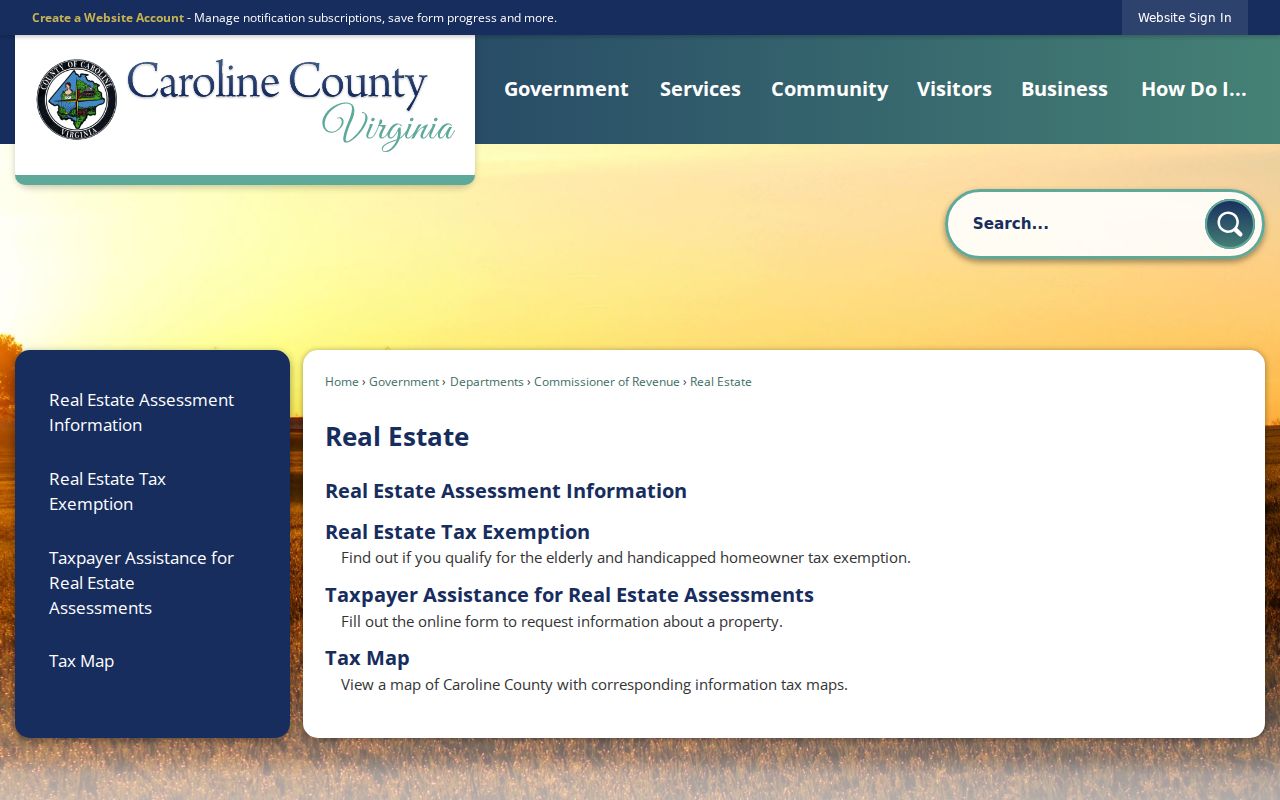
The landing page lists the county's current assessment forms. Use it to pull the right paperwork, then verify the value and assessment year with the Commissioner of the Revenue.
Caroline County Assessment Request Fields
The inquiry form keeps two things separate. It splits the person asking from the property being researched. Requester fields cover first and last name, phone number, and mailing address. On the property side, you supply the owner name and the situs address. A tax-map number, plus subdivision or lot, are optional identifiers. They help pin down the parcel. The form also offers checkboxes for the current tax assessment value and levy. Other options cover a formal appeal, deed reference and sales information, property location, and tax-map number with owner name and mailing address.
| Form field | Role | How to use it |
|---|---|---|
| Requester name, phone and mailing address | Contact route | Supply a way for the office to reply |
| Property owner and property address | Property identification | Separate the land from the requester’s own address |
| Tax-map number | Parcel key | Include it when available |
| Subdivision and lot | Recorded plat clue | Helps distinguish similar addresses or lots |
| Request type and comments | Specific record sought | Select value, levy, appeal, sale/deed or owner information |
The Commissioner's assessment form asks requesters to call 804-633-9834 if no response arrives within 48 hours. The form itself shows what to include when you submit a request.
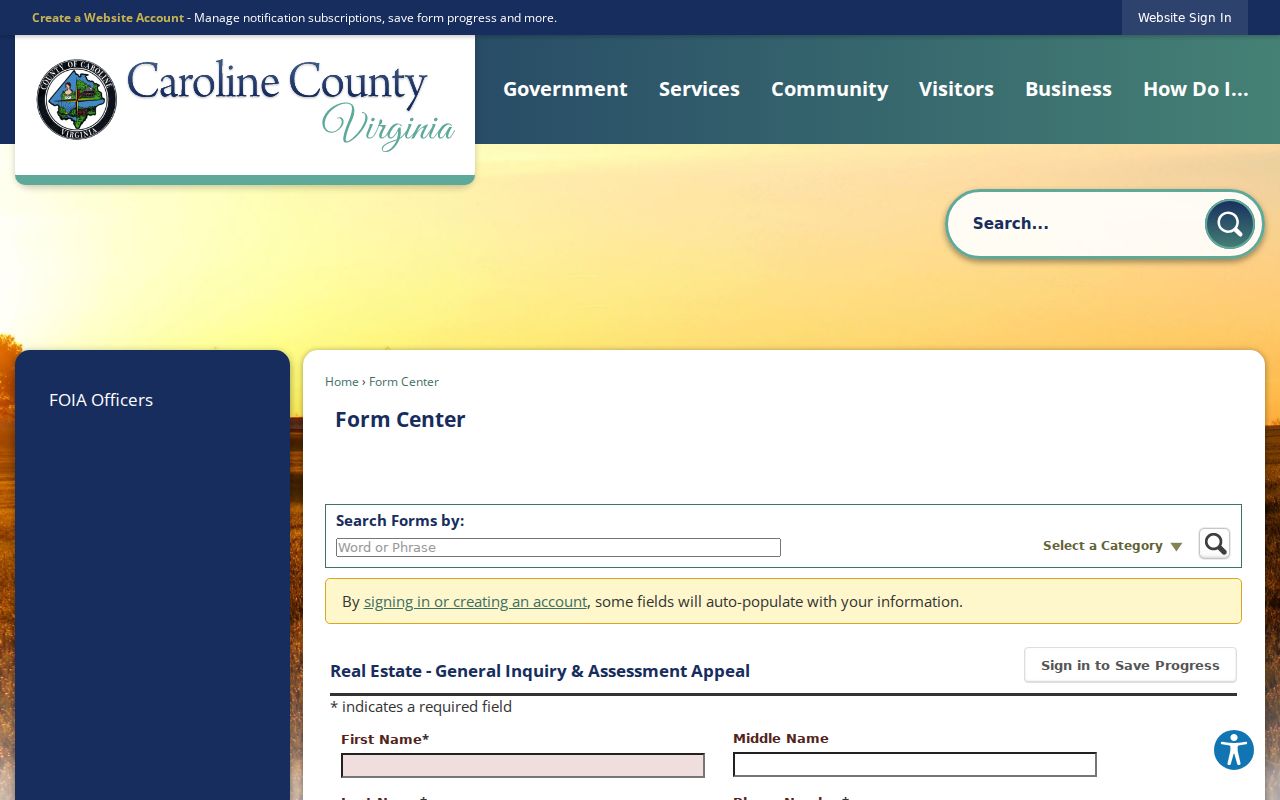
Attach supporting material through the form when it would help. Documents that identify the parcel or clarify the appeal make the Commissioner's review easier.
Commissioner Versus Caroline County Treasurer
Two Caroline County offices split the tax work. The Commissioner of the Revenue keeps the assessment roll, real-estate information, exemptions, and map references. The Treasurer handles tax tickets, payment history, account detail, and the ways you can pay. Each office answers a different question. A tax value, a payment balance, and a recorded deed are separate record types. Asking the wrong office can slow a request. The Treasurer sits at 212 North Main Street in Bowling Green. Call 804-633-5291. For real-estate inquiries, the Commissioner’s contact is 804-633-9834.
Payments run through several channels. The county’s E-Treasurer inquiry covers online payment. A public terminal is available in office. Phone payments go through ACI using jurisdiction code 1064 plus the account number from the bill. Caroline County cautions that only its own county and Official Payments routes are guaranteed. Outside vendors and bank bill-pay accounts are flagged as taxpayer risks. Read the county’s official instructions before sending any money. The Treasurer’s official page is the starting point for all of these routes.
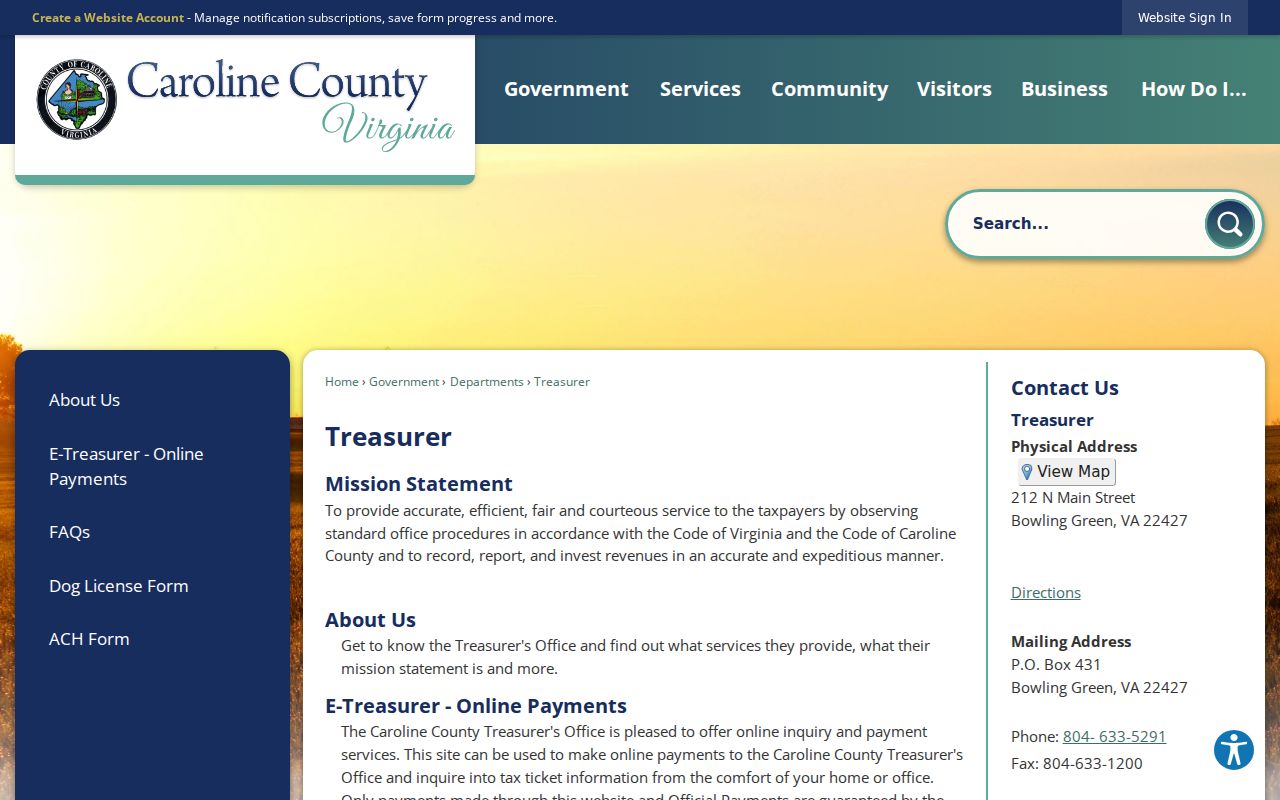
Use the official payment link from the county page, and verify any balance through the account detail.
Projected-Date Penalty on a Tax Ticket
The Treasurer inquiry help describes a projected-date field on each tax ticket. It calculates penalty and interest for a selected account. Leave the date blank and it defaults to the current date. Treat the figure as a calculation tool, nothing more. It is not a future payment deadline, and it is not proof of what the balance will be later. A payment posted after the lookup can change the result.
The same help material covers search modes. Street searches omit the number. Name searches take last name first, then first name. Account and parcel modes are more exact whenever a bill or assessment record is on hand, and the documented search options are described on the Treasurer’s Real Estate Inquiry help page.
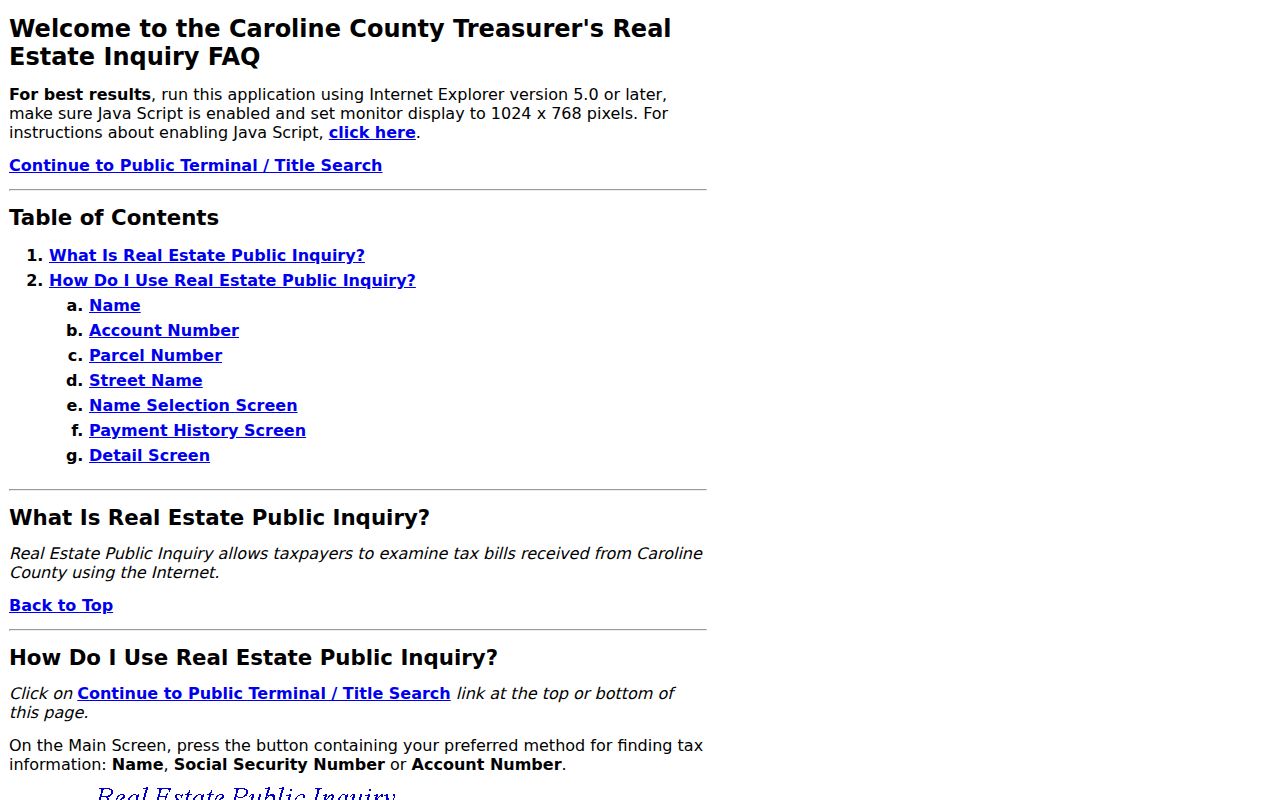
Confirm any projected total with the Treasurer before relying on it for a payment decision.
Delinquent Tax and Sale Records
The Treasurer inquiry can check a Caroline County tax account, and the Clerk records land instruments and court matters. The county publishes no verified current delinquent-tax list, auction calendar, bidder rule set, or tax-sale publication schedule. Gaps matter here. A tax balance alone does not mean a parcel is being sold, and an online absence does not mean no delinquency or court action exists.
For a current question, ask the Treasurer for the official balance and sale information. Then check the Clerk’s recorded instrument index and any Circuit Court file touching the parcel. A tax-sale notice or trustee deed should be confirmed through the final recorded instrument. For an administrative record not otherwise indexed, a Virginia FOIA request can be made under Code §2.2-3704, subject to exemptions and reasonable actual costs.
Assessment value and payment status answer separate questions. For what each number means, see the county’s property-value resource.